


Discover something new
Define your space with a custom-sized rug that reflects your personal taste and meets the highest standards of care.
Recommendations for optimal performance and longevity of your rug.

The majority of our rugs can be maintained and spot cleaned using the methods outlined in this section. However, please be aware that certain categories of rugs may require more specialized care. Always test an inconspicuous area before cleaning your stain. When in doubt, consult a local professional for stain removal and care recommendations.
Vacuum gently in the direction of the pile using low suction.
Avoid the use of a beater bar or brush roller as this can damage fibers.
Rotate the rug every few months for even wear and sunlight exposure.
Loose loops and stray fibers are normal on wool and natural fiber rugs. Loose loops may be tucked back in. Stray fibers on wool or natural fiber flatweave styles may be clipped.
Blot the spill immediately using a clean white cotton towel.
Make a gentle cleaning solution mixing 1 drop of dish soap with 2 cups of room temperature water.
Note: Do not use solution for large stains on viscose. This may require professional care.
Gently blot the stained area, moving from the outside in, to prevent spreading. If your rug is viscose or wool-viscose, use as little water as possible.
Always absorb extra moisture by placing a clean, dry towel on the wet spot for about a day.
Please see material-specific care for more detailed information.

Use a clean white cotton towel to blot and absorb as much liquid as possible.
Mix 1 small drop of dish soap with 16 oz (2 cups) of room temperature water.
Do not use hot water as it can set the stain.
Dip a white washcloth (or small towel) into the solution.
Wring it out so it’s damp, not dripping.
Gently blot the stained area, moving from the outside in, to prevent spreading.
Use light pressure — press, don’t rub.
Rinse the cloth in plain water, wring it out again, then blot the area once more to remove soap.
Take a clean, dry towel and fold it.
Place it on top of the wet spot.
Put a cookie sheet on top, then add some weight (such as books or boots).
Leave the setup for about a day; the towel will draw out any remaining moisture or stains.
When in doubt, consult a local professional for stain removal and care recommendations.
Many popular carpet cleaning spray products are not compatible with wool and can damage the fibers. Always test an inconspicuous area before cleaning.
Vacuuming using suction only can help reduce shedding over time.
Loose loops and stray fibers are normal on wool and natural fiber rugs. Loose loops may be tucked back in. Stray fibers on wool or natural fiber flatweave styles may be clipped.

Use a clean white cotton towel to blot and absorb as much liquid as possible.
Mix 1 small drop of dish soap with 16 oz (2 cups) of room temperature water.
Do not use hot water as it can set the stain.
Dip a white washcloth (or small towel) into the solution.
Wring it out so it’s damp, not dripping.
Gently blot the stained area, moving from the outside in, to prevent spreading.
If needed, a light swipe may be used to help lift the stain.
Rinse the cloth in plain water, wring it out again, then blot the area once more to remove soap.
Take a clean, dry towel and fold it.
Place it on top of the wet spot.
Put a cookie sheet on top, then add some weight (such as books or boots).
Leave the setup for about a day; the towel will draw out any remaining moisture or stains.
When in doubt, consult a local professional for stain removal and care recommendations.
Synthetic fibers are compatible with many popular carpet cleaning spray products, but always test an inconspicuous area before cleaning.

Use a clean white cotton towel to blot and absorb as much liquid as possible.
If a stain is large, dark or has been sitting for an extended period of time, it’s best to contact a local care professional.
Mix 1 small drop of dish soap with 16 oz (2 cups) of room temperature water.
Do not use hot water as it can set the stain.
Dip a white washcloth (or small towel) into the solution.
Wring it out so it’s damp, not dripping.
Using as little water as possible, gently blot the stained area, moving from the outside in, to prevent spreading. Never rub as this can damage fibers.
Rinse the cloth in plain water, wring it out again, then blot the area once more to remove soap.
Take a clean, dry towel and fold it.
Place it on top of the wet spot.
Put a cookie sheet on top, then add some weight (such as books or boots).
Leave the setup for about a day; the towel will draw out any remaining moisture or stains.
Viscose fibers are delicate and can be damaged by excess water or friction. If deeper cleaning is required, contact a professional cleaner well-versed in viscose, as improper cleaning can lead to discoloration, stiffness or texture changes.
Always test an inconspicuous area before cleaning.

Moisture can warp and discolor natural fibers. Use a clean white cotton towel to blot and absorb as much liquid as possible.
Place a dry towel under the rug if the spill has soaked through.
A specialized powder cleaner can help lift both water-based and oil-based stains.
Do not treat with baking soda as it is ineffective and difficult to remove from the weave.
This method is best for small, localized areas and not recommended for large spills.
If you must use water to help dilute the stain, it is recommended to use as little as possible.
Let the area dry completely (running a fan over it if available) in order to allow moisture to naturally evaporate.
Sprouts and strays are normal and can be clipped.
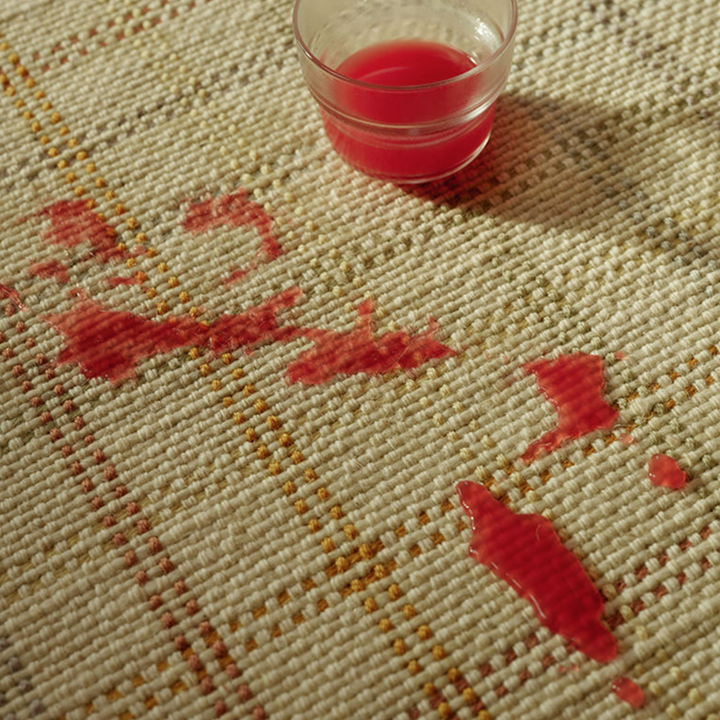
In addition to following the above care advice, you can keep select styles in their best condition by including our Protective Treatment with your rug order.
Ernesta’s Protective Treatment blocks spills, making them less likely to become permanent stains.
By repelling spills and debris, your rug’s fibers stay stronger and more intact for longer.
Our non-toxic formula makes it easy to protect your rug while also keeping your family safe.
